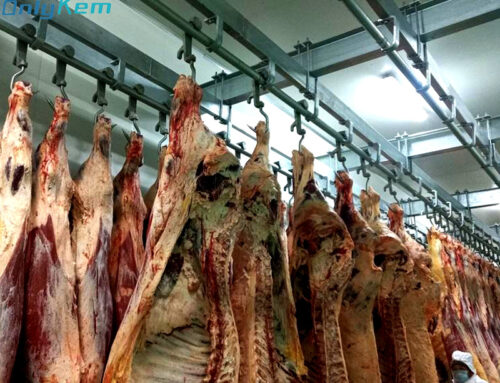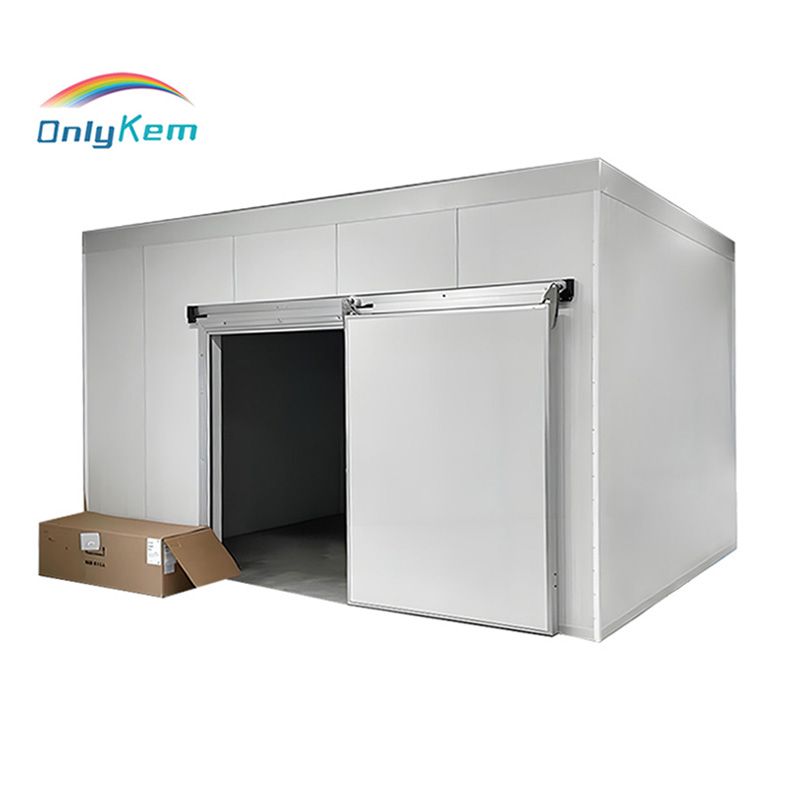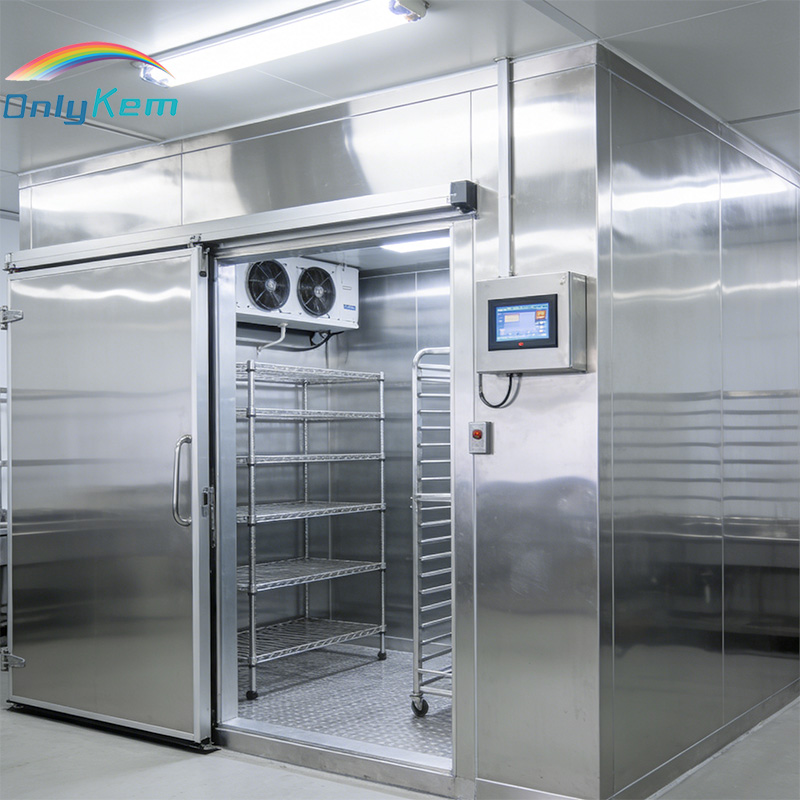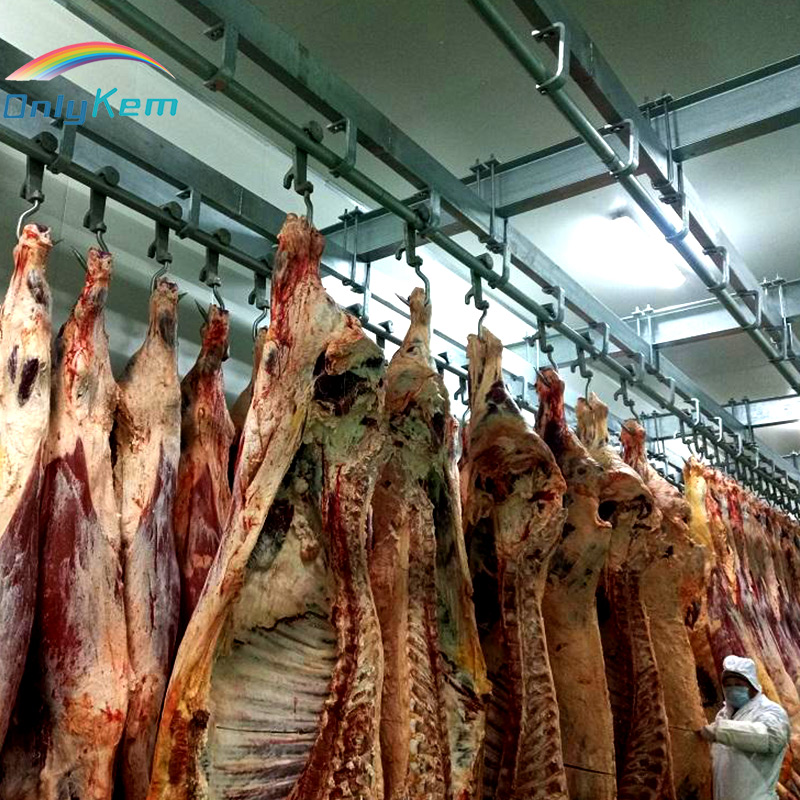
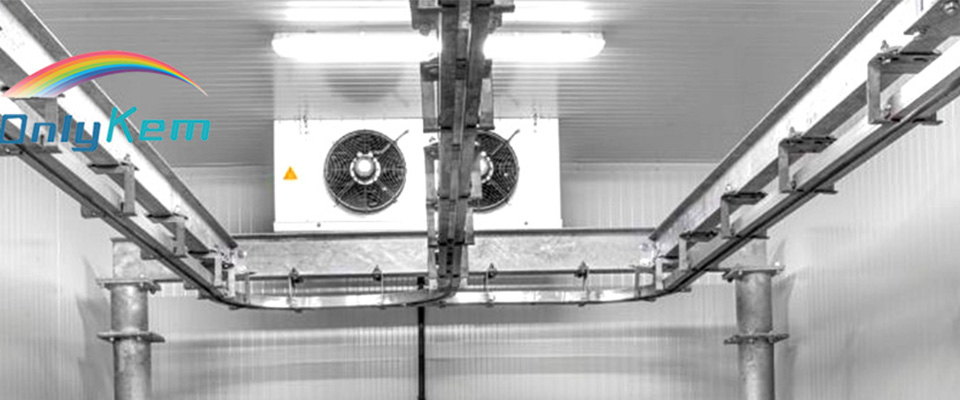
This type of walk-in cooler is very common in large meat factories and wholesale companies. The main benefit of the meat rail is that it solves three big problems at once: keeping meat quality high, speeding up work, and lowering costs.
Here is a simple breakdown of its advantages.
Core Advantage: High Quality and Less Weight Loss
Keeping the meat’s taste and weight is the most important goal. The hanging design is much better than stacking meat on shelves.
Keeps Meat Looking and Tasting Good
When meat hangs, it stays in its natural shape. It is not pressed against a shelf or the floor. This stops it from getting crushed or bent. Air can flow all around each piece. This cools the meat evenly and stops it from going bad. It also keeps more juice inside the meat. So, when the meat is thawed, it is still tender and tasty.
Saves Money by Reducing Weight Loss
Meat loses water when it cools. This loss is called “shrinkage” or “dry loss.” Less loss means more profit. In a hanging rail system, cold air flows well. It quickly forms a thin dry layer on the meat’s surface. This layer slows down further water loss. Studies show that a fast cooling system with hanging rails can lower dry loss from about 16% (in normal coolers) to just 1%. This means you have more meat to sell, which is direct profit.
Speed Advantage: Faster Work and More Output
Time is money in the cold chain business. The rail system makes the whole process smooth like an assembly line.
Cools Meat Twice as Fast
Because cold air hits every part of each hanging piece, heat leaves the meat quickly. For pork, a fast cooler can lower the meat’s average temperature to below 12°C in just 3–4 hours. The meat finishes the aging process in 12–16 hours. This is more than twice as fast as old coolers, which take 24–48 hours. This means you can use the same cooler to process more meat each day.
Makes Automated Work Easy
This is the best advantage of the rail system. The rails can connect the slaughter line, cooling room, cutting room, and loading dock without stopping. Special rail connectors allow the inside and outside rails to join perfectly. This means the cooler door does not need a huge gap for the rail, so very little cold air escapes.
| Work Step | Rail System Solution | Direct Benefit |
|---|---|---|
| Loading | A lifting device lowers the rail to match the truck or slaughter line. | One person can load meat easily. Less hard work. |
| Moving Inside | A small motor moves the hooks along the rail by itself. | Meat moves through the cooler without pushing. |
| Unloading | A winding rail path lets the oldest meat come out first. | No meat gets old or wasted. Good stock control. |
Strength and Cleanliness: Tough and Easy to Wash
Strong and Safe for Heavy Loads
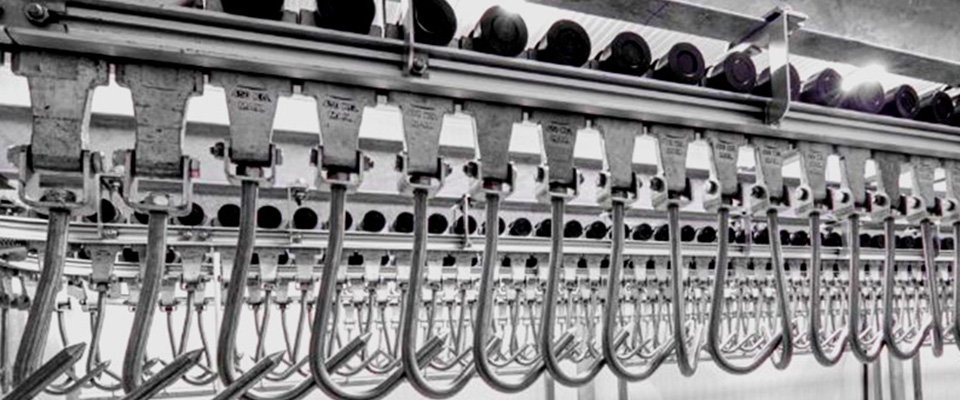
The rail is made of 304 stainless steel or galvanized steel. One rail can hold over 2 tons. You can have two, three, or more rows of rails. This strong build is safe and lasts a long time, even with daily use.
Clean Design, Easy to Wash
Stainless steel does not rust easily. It is simple to clean and sanitize, which meets food safety rules. Also, some coolers have a drip pan and drain pipe under the rails. This catches blood and water that drip from the meat. It stops the floor from getting icy and slippery, which keeps workers safe.
Key Design Points
To get all these benefits, you need to think about a few things:
-
Cold Air Power – Hanging meat takes up more open space. The cooler fans must be strong enough to push cold air through all the hanging meat.
-
Strong Building – The roof or steel frame holding the rails must be very strong. Leave enough space between rails. A good rule is at least 800mm between rails so air can flow around each piece.
-
Save Energy – Use a well-sealed cooler panel and an efficient cooling unit to keep electricity costs lower.
Summary
A walk-in cooler with a meat rail is more than just a cold room. It is a complete system that combines moving meat with fast cooling. A normal cooler is like a static warehouse. But a rail system turns the cooler into a moving production line. It keeps the meat at its best quality, while also making work faster and saving money.