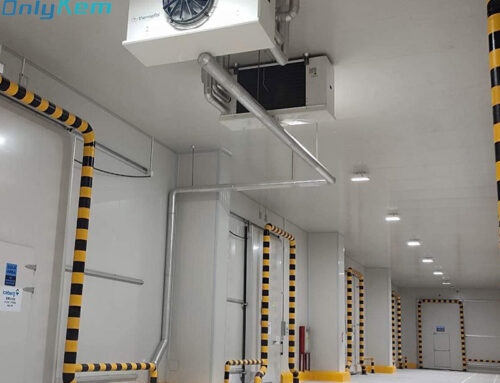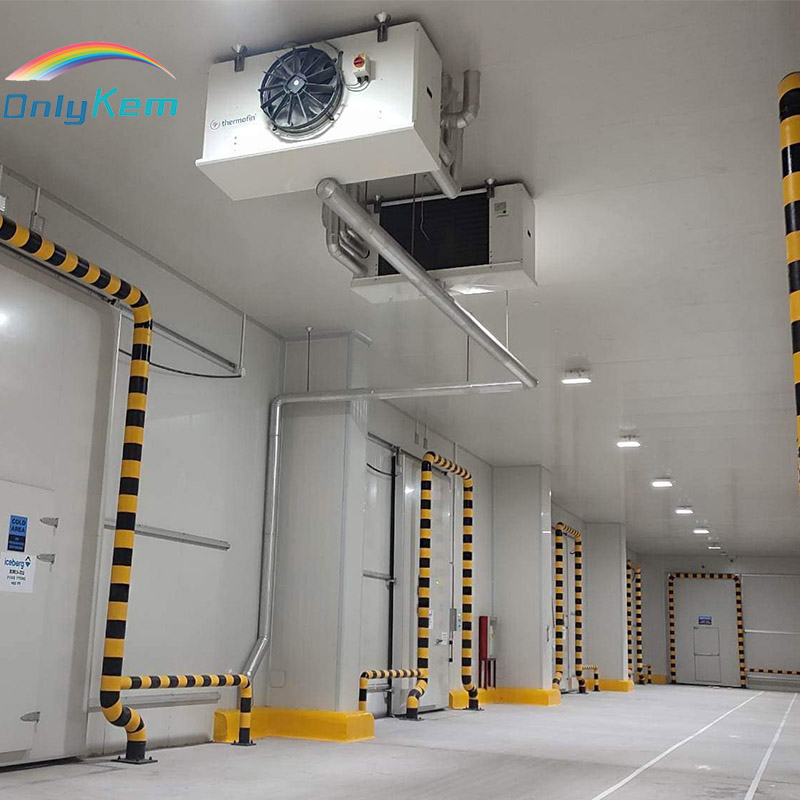
The problems encountered in the use of cold storage mainly revolve around six aspects: refrigeration system failures, insulation and sealing failures, electrical control issues, improper storage of goods, safety risks, and poor operational management. These issues are often interrelated, for example, equipment failures can cause fluctuations in warehouse temperature, leading to cargo loss and increased energy consumption.
The following is a detailed analysis of various common problems:
Refrigeration System: The “Heart” Problem of Cold Storage
The refrigeration system is the most critical component of a cold storage, and the problems are also the most concentrated.
Poor or no cooling effect: This is the most common problem. Possible reasons may include:
Refrigerant leakage: Insufficient refrigerant in the system leads to a decrease in cooling capacity.
Compressor failure: The efficiency of the compressor decreases, usually caused by component wear due to prolonged use.
Excessive frosting on the evaporator: A thick frost layer can seriously hinder heat exchange and affect the cooling effect.
Poor heat dissipation of condenser: Dust and dirt accumulate on the surface of the condenser, leading to a decrease in heat dissipation efficiency and even causing high-pressure protection shutdown.
Expansion valve malfunction: Damaged temperature sensing bulb, ice blockage or dirty blockage may cause abnormal refrigerant flow, or even complete closure.
Large fluctuations in storage temperature: Unstable temperature may accelerate the deterioration of goods. The main reasons are:
Excessive temperature difference between inside and outside: frequent opening and closing of the storage door or inadequate sealing of the storage door can cause loss of cold air and invasion of hot air.
Improper defrosting control: Excessive or prolonged defrosting can cause temperature rise.
Improper setting of equipment parameters: Improper setting of parameters such as temperature controller and pressure controller may lead to frequent start and stop of the compressor.
Sensor malfunction: The temperature and humidity sensor is malfunctioning, providing incorrect data, resulting in a system misjudgment.
Other system malfunctions:
The phenomenon of “running cold”: the insulation layer of the refrigeration pipeline or storage body is damaged, resulting in ineffective loss of cooling capacity.
There is air in the system: Air mixed into the refrigeration system can cause abnormal increases in exhaust pressure and temperature, reducing refrigeration efficiency.
Pipeline blockage: Components such as filters and expansion valves in the system are blocked by dirt, affecting the circulation of refrigerant.
Insulation and sealing: The “cotton coat” in the cold storage is damaged
Failure of insulation material: The gaps, seams, or insulation layer of the warehouse board or pipeline are damaged, resulting in loss of cooling capacity, prolonged high load operation of the refrigeration unit, and increased energy consumption.
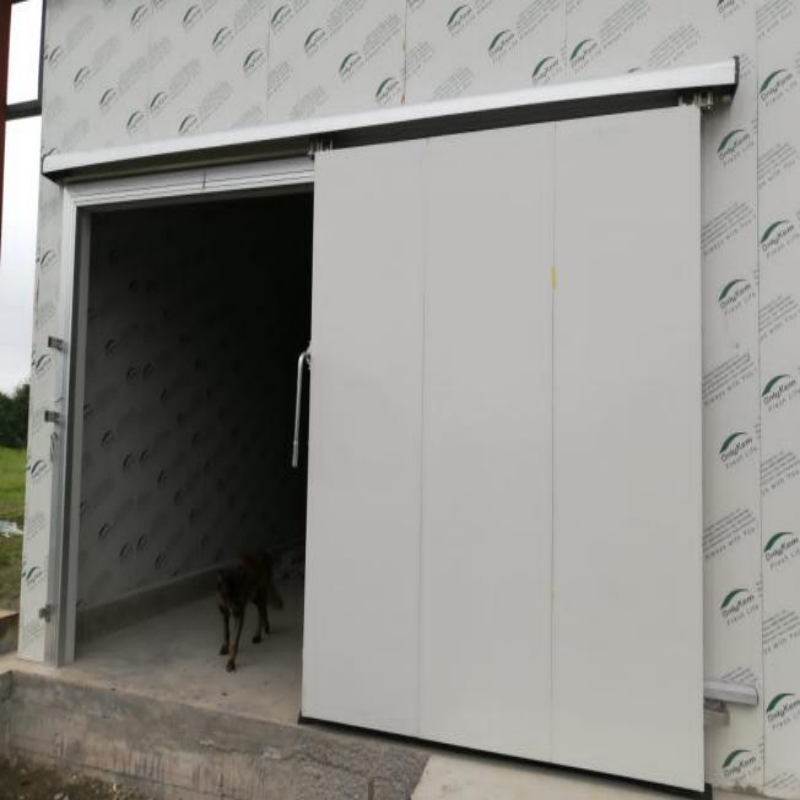
Poor sealing of the warehouse door: The aging, damage, or improper installation of the sealing strip of the warehouse door can lead to cold air leakage and external hot air intrusion, directly affecting the temperature stability and energy consumption of the warehouse.
Floor issue: For low-temperature cold storage, if the anti freezing system under the floor fails, it may cause the floor to bulge and crack, affecting structural safety and operations inside the warehouse.
Electrical and Control Systems: The ‘Brain’ of Cold Storage Failed
Power failure: The dedicated circuit breaker tripped, the power supply line aged or had poor contact, causing the cold storage to suddenly shut down.
Thermostat malfunction: The display screen is not displaying, the buttons are malfunctioning, or the temperature probe is damaged, resulting in the inability to accurately control the temperature of the warehouse.
Communication interruption: In ultra-low temperature environments (such as -30 ℃), IoT modules used for monitoring may experience communication packet loss, leading to remote monitoring failure.
Lighting system malfunction: The lighting fixtures in the warehouse are not explosion-proof, have poor moisture resistance, or have short circuits, which may cause electrical fires.
Storage of goods: improper management is the ‘culprit’
Unreasonable stacking:
Impact on airflow circulation: If goods are stacked too tightly or directly against walls, it will hinder the circulation of cold air, causing local “hotspots” and accelerating the deterioration of goods.
Exceeding storage capacity: Excessive purchase volume and exceeding the design load of the cold storage, resulting in prolonged inability to lower the storage temperature.
Improper temperature and humidity control:
Temperature fluctuations: Even small temperature fluctuations can have a serious impact on sensitive goods such as fresh produce and medicine. Research has shown that for every 1 ℃ increase in error during temperature zone switching, the loss rate may increase by 17%.
Excessive humidity: Excessive humidity can easily cause condensation and mold on the surface of goods; If the humidity is too low, it may cause the goods to dry up (lose water).
Problems with the goods themselves: There are potential issues with the goods before they are stored, such as insufficient pre cooling or beginning to deteriorate, which can quickly deteriorate after storage and potentially affect surrounding goods.
Goods loss: Due to the above reasons, fruits, vegetables, meat, medicines, etc. may experience mold growth, frostbite, dry wear and other losses, leading to storage disputes and economic losses.
Security risk: an undeniable ‘time bomb’
Fire:
Thermal insulation materials are flammable: polyurethane foam and other thermal insulation materials used in some cold storages burn fast and release a large amount of toxic smoke.
Hidden dangers in electrical circuits: unauthorized connections, aging circuits, short circuits, etc. are common causes of fires.
Violation of hot work regulations: During the renovation or maintenance of cold storage facilities, unlicensed welding, gas cutting, and other illegal hot work operations can easily ignite insulation materials.
Ammonia explosion: For cold storage in ammonia refrigeration systems, once ammonia leaks and reaches the explosive limit (15.4% -28% volume concentration in air), it can explode when exposed to open flames or electric sparks.
Ammonia gas leakage:
Toxic hazards: Ammonia has strong irritants, and short-term exposure to high concentrations of ammonia can cause suffocation or even death.
Equipment corrosion: Ammonia has strong corrosiveness to copper and copper alloys, and the presence of water in the system can exacerbate pipeline corrosion and increase the risk of leakage.
Personnel suffocation:
Fire smoke: The large amount of toxic smoke such as carbon monoxide produced by a fire can easily cause poisoning and suffocation of personnel in a confined space.
Refrigerant leakage: In a sealed cold storage, if a large amount of refrigerant (especially Freon) leaks, it will replace oxygen in the air, causing personnel to suffer from hypoxia and suffocation.
Other security risks: personnel trapped due to locked warehouse doors; The ground is frozen and slippery, causing falls and injuries; Collapse of shelves, etc.
Improper management and maintenance:
Low inspection efficiency: relying on manual regular inspections, which is time-consuming, costly, and has problems such as inaccurate data recording and delayed discovery of hidden dangers.
Lack of maintenance records: Lack of systematic and standardized maintenance plans and records, resulting in equipment problems that cannot be traced and prevented.
Inexperienced personnel operation: Operators who are not familiar with the equipment, have incorrect parameter settings, or mishandle alarms may cause bigger problems.
Other issues
Ice formation inside the warehouse: Poor drainage system, incomplete defrosting, or poorly sealed warehouse doors can all cause ice formation on the floor, walls, or below the evaporator, affecting operations and posing safety hazards.
Odor generation: Mixing different goods, failure to clean corrupt goods in a timely manner, or inadequate cleaning and disinfection can lead to odor generation in the warehouse, affecting the quality of other goods.
Excessive noise: Compressors, fans, and other equipment may produce abnormal noise during operation due to aging, looseness, or improper installation, affecting the surrounding environment.
Summary
The smooth operation of cold storage is a systematic project. Negligence in any link, whether it is hardware failure or management vulnerability, can trigger a chain reaction, causing economic losses and even security accidents.
Instead of passively responding to problems after they arise, it’s better to focus on proactive prevention:
Establishing a regular maintenance system is the core of ensuring equipment health and extending the lifespan of cold storage.
Introducing an intelligent monitoring system can achieve 24-hour online monitoring and early warning, effectively improving management efficiency and security.
Developing and practicing emergency plans can ensure that personnel can respond correctly in case of emergencies such as leaks and fires, minimizing losses to the greatest extent possible