
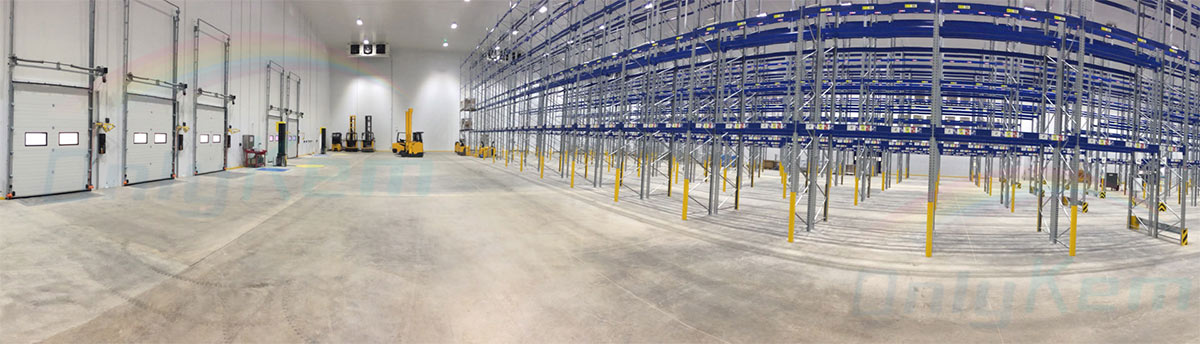
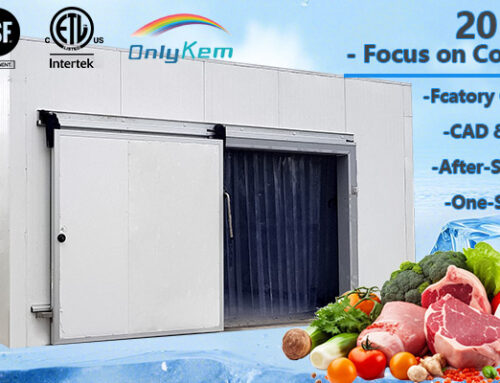
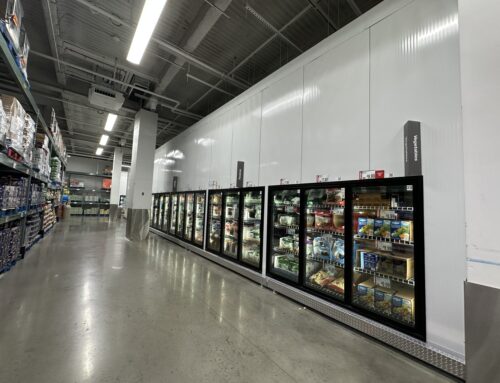
Cold storage essence: It is a building or equipment that can be artificially cooled.
Function: Create a suitable low temperature and high humidity environment for storing items through cooling facilities.
Purpose: It is a place for processing and storing perishable goods such as agricultural and livestock products, food, and medicine, which can escape the influence of climate, effectively extend their shelf life, and regulate market supply.
A complete cold storage, regardless of size, is a highly integrated system. It is not just the visible ‘cold room’, but is composed of multiple core systems working together.
We can break down the components of the cold storage into the following four core systems:
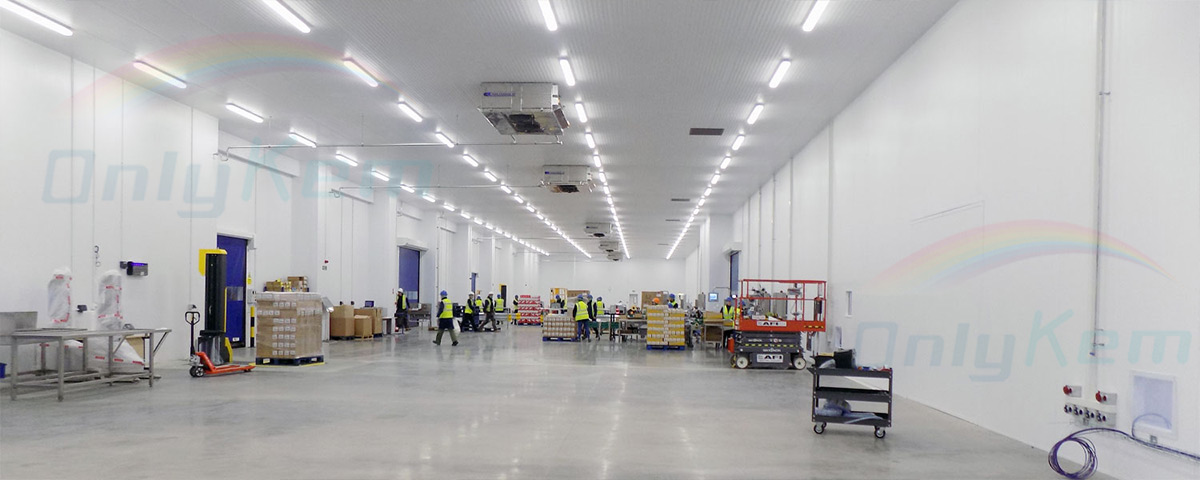
1、 Library system
This is the “body” and “shell” of the cold storage, mainly used for insulation and isolation from external humid and hot air.
Cold Storage body:
Function: The walls, ceilings, and floors that make up the cold storage prevent the loss of cooling capacity.
Material: Both sides are usually made of color steel plate or stainless steel plate, and the middle layer is made of insulation material.
Core insulation material:
Polyurethane: currently the mainstream choice, with the best insulation performance, but slightly higher price.
Polystyrene: Its insulation performance is slightly inferior, but it is cheap and suitable for room temperature warehouses with low requirements.
Extruded board: usually used for ground insulation, with strong compressive strength.
Kumen:
Function: It is the channel for goods to enter and exit, and also the place where cooling capacity is most easily lost.
Type: Depending on the usage scenario, there are sliding doors (saving internal space), hinged doors (similar to household doors), electric rolling shutter doors, and free doors (quick access, commonly used in logistics channels).
Ground insulation and antifreeze measures:
Function: To prevent the cold from the ground from being transmitted to the foundation, which may cause frost heave and cracking of the foundation.
Method: For low-temperature cold storage, in addition to laying insulation layers on the ground, it is usually necessary to lay electric heating wires or ventilation pipes for heating to prevent soil freezing and damaging the ground.
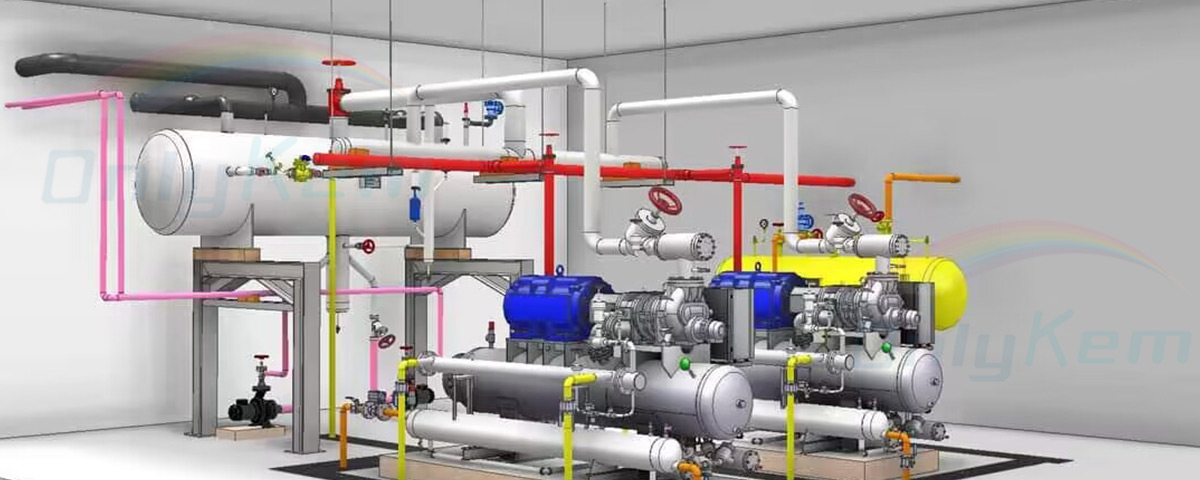
2、 Refrigeration system
This is the “heart” and “blood vessels” of the cold storage, responsible for generating cold and delivering it to the warehouse.
Compressor:
Function: The “power source” of the refrigeration system compresses the refrigerant to circulate and transfer the heat inside the storage to the outside.
Common types:
Fully enclosed: Sealed like a compressor in a household refrigerator, with low power, used for micro sized cold storage.
Semi enclosed/vortex type: commonly used in medium-sized cold storage, with high efficiency and easy maintenance.
Screw type: commonly used in large cold storage, with huge power and smooth operation.
Condenser:
Function: Heat dissipation device. Cool the high-temperature and high-pressure gas discharged from the compressor into liquid.
Type:
Air cooling: Blows with a fan like an air conditioner outdoor unit, easy to install, commonly used in small warehouses.
Water cooling: using a water tower to circulate water for cooling, with high heat dissipation efficiency, suitable for medium-sized and above cold storage that requires stable operation.
Evaporative: Combining air and water cooling, it has good energy-saving effect and is common in large cold storage.
Evaporator:
Function: Heat absorbing device. Installed inside the warehouse, the liquid refrigerant evaporates and absorbs heat here, causing the temperature of the warehouse to drop.
Common forms:
Air cooler (ceiling mounted): The most commonly used, it uses a fan to forcefully blow air, which cools down quickly but has a drying effect (suitable for most scenarios).
Duct: Installed around or at the top of the warehouse, it relies on natural convection heat transfer, has no wind sensation, and has good moisturizing effect. It is suitable for goods that need to be stored for a long time and are afraid of drying out (such as meat, garlic, and apples), but it is more troublesome to defrost after frosting.
Expansion valve and pipeline:
Function: Adjust the flow and pressure of refrigerant, and connect various devices.
Refrigerant: A medium used to transport heat, commonly including R22 (gradually phased out), R404A, R134a, R410A, R717 (ammonia, used in large cold storage), etc.
3、 Electrical and Control Systems
This is the “brain” and “nerve” of the cold storage, responsible for commanding equipment operation and monitoring status.
Cold storage dedicated control box/electrical control cabinet:
Function: Centralize control of the start and stop of compressors, fans, defrosting heating wires, etc.
Function: Includes contactors, thermal relays, overload protectors, etc.
Temperature and humidity controller/display screen:
Function: Set and display the temperature inside the library. Usually, sensor probes are inserted into the warehouse.
Advanced: Medium sized and above cold storage will have a PLC touch screen, which can view historical temperature curves, fault alarm records, etc.
Defrosting system:
Function: If the evaporator works for a long time, it will freeze and frost, affecting the cooling effect and requiring regular melting.
Method: There are usually electric heating defrosting (small storage) and hot gas defrosting (large storage, using hot gas discharged by a compressor).
lighting:
Function: Lighting inside the warehouse.
Requirement: Moisture proof, explosion-proof, and corrosion-resistant cold storage special lights (LED cold storage lights) must be used, and the switch is usually installed on the outside of the warehouse door with indicator lights.
4、 Auxiliary and supporting systems
This is a supporting facility for cold storage. Although it is not a direct refrigeration, it is crucial for daily use and cargo safety.
Shelf system:
Function: Improve space utilization and facilitate the stacking of goods.
Types: Light duty shelving, medium duty shelving, heavy-duty crossbeam shelving, and drive in shelving (for large warehouses).
Temperature Monitoring and Recording System :
Function: Real time monitoring of temperature. Once the temperature is abnormal, an alarm can be triggered through a mobile app or SMS. This is a mandatory requirement for pharmaceutical warehouses and high-end food warehouses.
Backup power source (generator):
Function: To prevent sudden power outages from causing a rise in warehouse temperature and damage to goods. For cold storage facilities storing valuable goods or vaccines, a backup power source is essential.
Ventilation and air exchange system:
Function: For cold storage of fruits and vegetables (especially controlled atmosphere storage), fresh air needs to be introduced to remove carbon dioxide and ethylene, preventing fruits and vegetables from spoiling.
Summary diagram: Cold storage workflow
Heat in the warehouse → absorbed by the evaporator → refrigerant turns into gas.
Gas is extracted by the compressor → compressed into high-temperature and high-pressure gas → sent to the condenser.
Condenser heat dissipation → refrigerant returns to liquid.
The liquid is throttled and depressurized through the expansion valve, and then returns to the evaporator to absorb heat again.
Repeatedly, the temperature inside the warehouse decreases.
The electric control box controls the start and stop of all the above links to ensure a constant temperature.
Leave A Comment